




Search our document section below where you will find IKO Products Brochures, Technical Data Sheets, BIM files, BBA certification, TDS documents and Case Studies showing full details of IKO installations.
For DECLARATION OF PERFORMANCE DOCUMENTS please visit ikodop.eu.
Please contact us if you require any further assistance or product information.



| Filename | IKO Guidance document on Safe2Torch Mar19.pdf |
| Filesize | 5.66 MB |
| Version | 1 |
| Date added | May 14, 2019 |
| Downloaded | 448 times |
| Category | Technical Briefing Documents |
Disclaimer
Whilst every precaution is taken to ensure that the information given in this literature is correct and up to date it is not intended to form part of any contract or give rise to any collateral liability, which is hereby specifically excluded. IKO reserve the right to amend and/or withdraw this document without notice. Users of published guidance for the installation of IKO materials should therefore verify with the company whether any changes in our specification, application details, withdrawals or otherwise have taken place since this literature was issued.
What is Safe2Torch?
Safe2Torch is an NFRC campaign developed in partnership with contractor and manufacturer members of the NFRC, seeks to significantly reduce the risk of roof fires when using gas torches, either to dry out roofs or when used to install torch-on membranes.
What are the Main Points?
Those who create risks have a responsibility to manage those risks – placing the ownership of potential fire risks in the right place is the main message of Safe2Torch.
Safe2Torch also fits into existing risk assessment systems. It is designed to support specification writers in complying with the Construction Design and Management Regulations 2015, which state that, “The person who selects products for use in construction is a designer and must take account of health and safety issues arising from their use. If a product is purpose-built, the person who prepares the specification is a designer and so are manufacturers, if they develop a detailed design.
Therefore, it is essential to ensure all fire risks are identified as far as reasonably possible at the survey stage and factored into the specification as it is written. Safe2Torch is designed to confirm that where there is a fire risk (or a fire risk cannot be ruled out) designers and installers will default to torch-free solutions, and revert to torch application only if it is proven safe and agreed between all parties.
This means that where any fire risk has been identified, or, just as importantly, where it cannot be ruled out, then the relevant parts of that specification must default to torch-free solutions. Sometimes the risk may not be fully known until work begins (e.g. while uncovering an area on a refurbishment project) and the roofing contractor will be able to evaluate the risks and adapt as work proceeds.
If, subsequently, it can be demonstrated that an area is safe (e.g. when uncovering an area on a refurbishment project) then the specification can, if agreed between all parties, revert to torch application.
Why was it Necessary?
Roof fires caused by the use of gas torches, no matter how minor, pose a serious threat to life, property, the image of the industry and possibly even the long-term future of the use of gas torches to either dry out roofs or the use of torch applied membranes.
The Safe2Torch campaign promotes the positive side of the industry, where safe specifications and safe working practices are second nature. It will give clients assurance that if they engage with a Safe2Torch Contractor and/or Manufacturer, their roof works will have been planned and installed within the requirements of the Safe2Torch guidance.
In the wrong hands the use of a gas torch creates a high risk. The competency of the user is one that must be assessed prior to any works are undertaken.
Safe2Torch Pledge
NFRC manufacturers and contractors have signed up to the Safe2Torch pledge which states:
- Highlight and report specifications which do not conform to Safe2Torch;
- Identify and reduce the risk of roof fires caused by gas torches;
- Ensure all employees are trained in the use of gas torches and their associated risks;
- Ensure all supervisors or charge hands have completed the Safe2Torch checklist prior to hot works commencing.
Safe2Torch Checklist
It is recommended that anyone preparing a specification should refer to the Safe2Torch Checklist for any identified items and use of a direct torch-on application and use a torch free solution.
Decks and Insulation
- Timber / Other combustible materials
- Metal deck (refurbishment) where old materials may accumulate in the troughs
- Insulation – unless specifically designed and tested for use with torch-on membranes
Details
- Expansion joints with voids and/or combustible fillers
- Fibreboard or timber fillets
- Detail under abutments to roof tiles, slates and thatch
- Detail under cladding/rendering
- All abutments with open cavities (open perpends)
- All timber substrates
- Change in level details with fixed timber or plastic fascias and/or all soffits, gutters or restricted spaces
- Window sills and frames, door sills, louvered vents, air ducts, intakes and outtakes
- Junctions to existing waterproofing with flammable insulation/ deck materials
- Vulnerable plastic curbs, domes, pipes, etc
- Working while in close proximity to potentially flammable coatings.
Existing weathering components with concealed flammable materials.
These include:
- Timber, DPC or sarking membranes beneath fixed metal capping systems
- Existing kitchen extraction plant coated in oils or fats
- Flammable wrapping to trunking/ducting
- Timber cladding
- Existing metal or plastic copings/cappings
It is always the responsibility of the contractor to carry out a risk assessment on all aspects of the contract. This guidance is solely to provide assistance in the assessment of the risks at specification stage
The images below are examples of elements which may be present on a roof which are deemed to be vulnerable, and torch free installations should be specified from the outset.


Where the use of a gas torch to dry the roof or for the installation of the waterproofing membranes, it is paramount that all risks have been identified and Safe2Torch measures have been put into place.
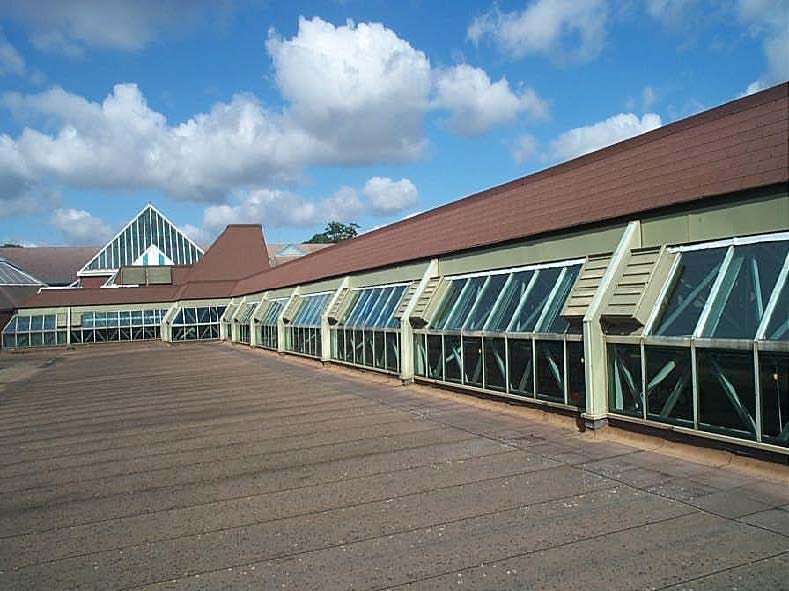


Typical details where Safe2Torch must be allowed for are highlighted below.
An installing contractor must undertake their own Safe2Torch risk assessment to define any areas that may be deemed a risk including movement joints and the following:


How to address the risks – Safe2Torch guidance
• Specification
• Installer competency
• Drying up
• Material selection
• Waterproofing detailing
Specification
Many specification writers (eg architects, surveyors, building owners, roofing manufacturers, roofing contractors) may not be aware of their obligations under the Construction Design and Management Regulations 2015, which state that, “The person who selects products for use in construction is a designer and must take account of health and safety issues arising from their use. If a product is purpose-built, the person who prepares the specification is a designer and so are manufacturers, if they develop a detailed design.
This means anyone writing a specification or where the installation of the waterproofing which includes hot works needs to assess the hazards associated with the works and design them out, or greatly reduce the risks.
It is essential to ensure all fire risks are identified as far as reasonably possible at the survey stage and factored into the specification as it is written.
This means that where any fire risk has been identified or, just as importantly, where it cannot be ruled out that the relevant parts of that specification must default to a torch free solution.
Where a flammable substrate or risk of fire occurs, or the risk is not known, an alternative torch free solution should be specified from the outset, to which may be locally isolated as a detail abutment.
This does not mean torch on membranes are not safe to use but the specification needs to reflect the areas where there could be a risk of fire.
Sometimes the risk may not be fully known until work begins (e.g. while uncovering an area on a refurbishment project) and the roofing contractor will be able to evaluate the risks and adapt as work proceeds.
If, subsequently, it can be demonstrated that an area is safe then the specification can, if agreed between all parties, revert to torch application.
Gas torch unsupervised and abutment to cladding
Pitched roof abutments
Movement joints
How to address the risks – Safe2Torch guidance
• Specification
• Installer competency
• Drying up
• Material selection
• Waterproofing detailing
Specification
Many specification writers (eg architects, surveyors, building owners, roofing manufacturers, roofing contractors) may not be aware of their obligations under the Construction Design and Management Regulations 2015, which state that, “The person who selects products for use in construction is a designer and must take account of health and safety issues arising from their use. If a product is purpose-built, the person who prepares the specification is a designer and so are manufacturers, if they develop a detailed design.
This means anyone writing a specification or where the installation of the waterproofing which includes hot works needs to assess the hazards associated with the works and design them out, or greatly reduce the risks.
It is essential to ensure all fire risks are identified as far as reasonably possible at the survey stage and factored into the specification as it is written.
This means that where any fire risk has been identified or, just as importantly, where it cannot be ruled out that the relevant parts of that specification must default to a torch free solution.
Where a flammable substrate or risk of fire occurs, or the risk is not known, an alternative torch free solution should be specified from the outset, to which may be locally isolated as a detail abutment.
This does not mean torch on membranes are not safe to use but the specification needs to reflect the areas where there could be a risk of fire.
Sometimes the risk may not be fully known until work begins (e.g. while uncovering an area on a refurbishment project) and the roofing contractor will be able to evaluate the risks and adapt as work proceeds.
If, subsequently, it can be demonstrated that an area is safe then the specification can, if agreed between all parties, revert to torch application.
Safe2Torch Areas

Within a specification a contractor should ensure that areas where it is not safe to use a gas torch are identified and highlighted, it is recommended that this should be no less than 900mm from any identifiable risk.
Safe2Torch Roof Plan
Installer Competency
Where the use of a gas torch is allowed, it is still imperative that the installer and user of the gas torch are deemed competent in its use. The use of an NFRC and manufacturers approved contractor networks should all be signed up to Safe2Torch as part of their accreditation.
Training
It is a requirement of Regulation 9 of the Provision and Use of Work Equipment Regulations 1998 that anyone using work equipment receives adequate training in its use for purposes of Health and safety. This includes training in the methods that may be adopted when using the work equipment, any risks that this use entails and the precautions to be taken. The requirement extends beyond those using the equipment to include those supervising or managing them.
There is a need for roofing operatives and their line managers to have clear understanding of the risks involved when undertaking hot works and the control measures required to make the works safer.
Pre-Work Checks
Other pre-work checks should include an assessment of the substrate – under no circumstances should a torch be applied direct to a timber roof deck or timber upstands. Including timber fillets, even if the substrate has been treated with a bitumen primer. A self-adhesive base-layer or a mechanically fastened layer should be used to protect a timber substrate coming into contact with the naked flame. A gas torch should never be used directly to a timber roof deck.
Permit to Work
A permit to work is a formal written system used to control certain types of work that are potentially hazardous. Including where there is risk of fire from work activities. The purpose of the permit to work is to document the work to be done and the precautions to be taken. Permits to work form an essential part of managing and controlling hot works in order to provide a safe system of work.
Drying Up

Wherever possible any newly installed roof deck should be protected, and covered from weather to ensure drying out is not necessary. However, in the event of a roof becoming wet it is important to ensure drying out is undertaken safely.
There are several methods of drying a roof that can be employed by the installing roofing contractor, but the most common method due to speed and effectiveness is still by the use of a gas torch. When a gas torch is to be used for drying a roof a thorough inspection of the roof and all fire risks identified.
Where these risks are identified, the operative must adopt a torch free area in line with the contractor’s public liability insurance. However it is recommended that this should be no less than 900mm.
Methods of drying out within restricted areas will vary from wiping with dry rags, mops etc and then allowing natural weather conditions to finish the drying.
Material Selection
The selection of the waterproofing is critical where Safe2Torch zones have been identified. Most waterproofing manufacturers offer a range of cold applied waterproofing membranes and solutions that should be specified within any specification.
 .
. .
.